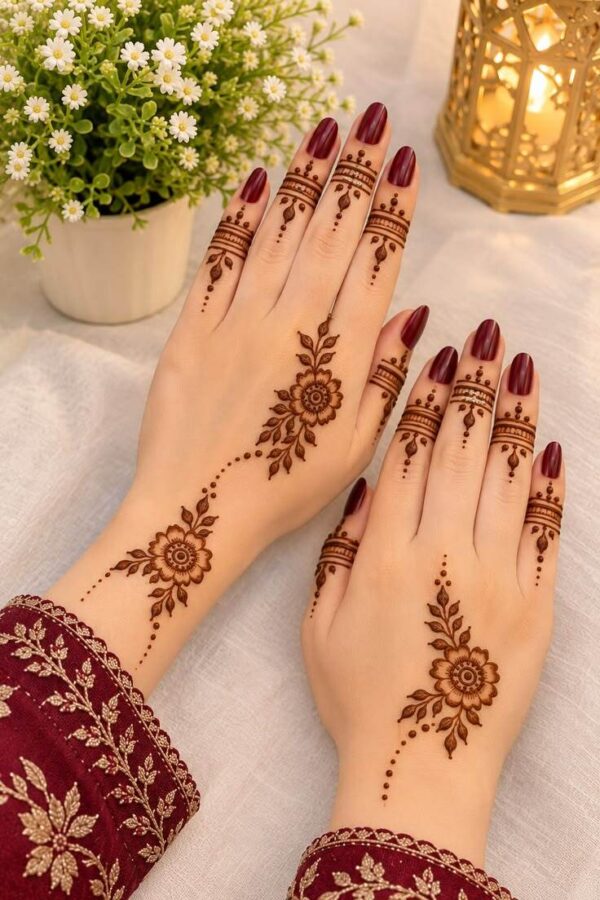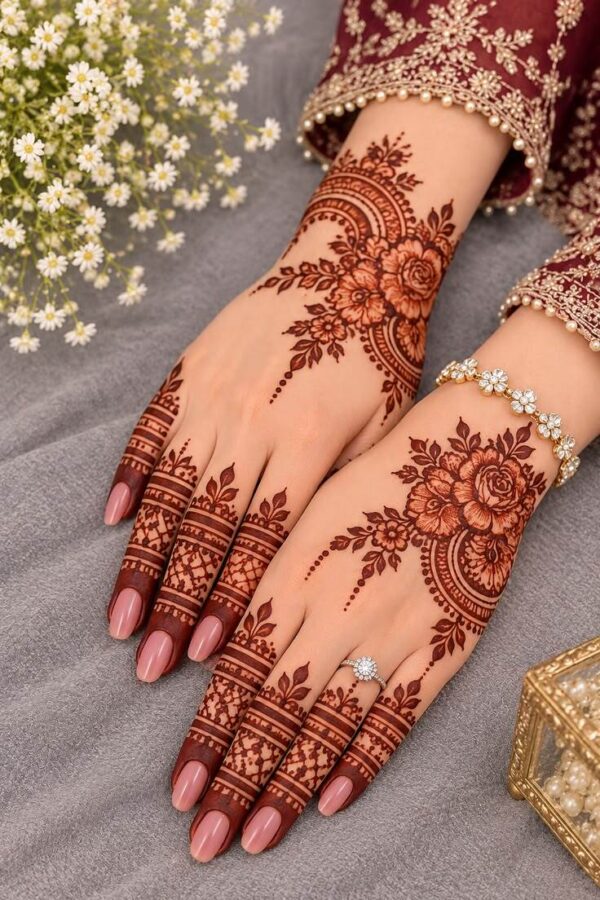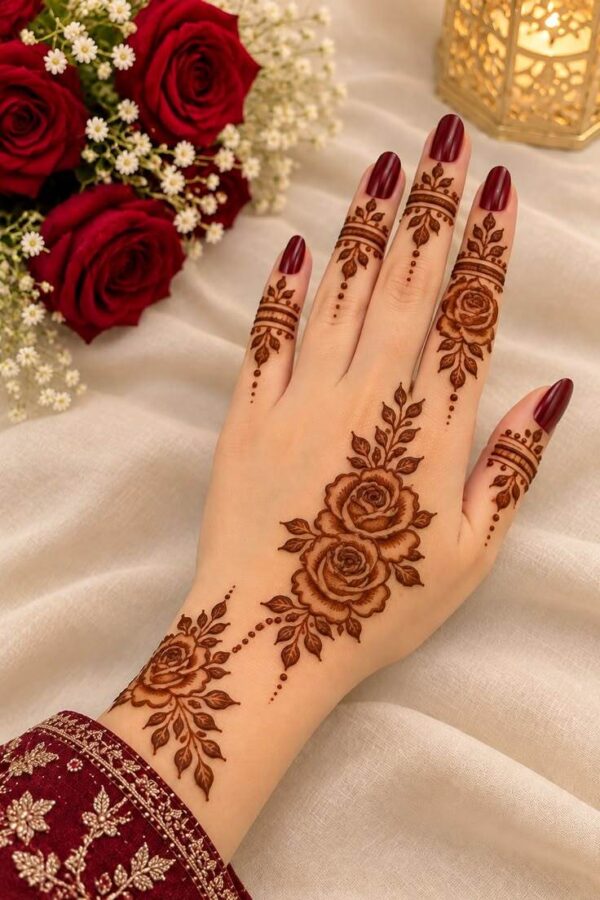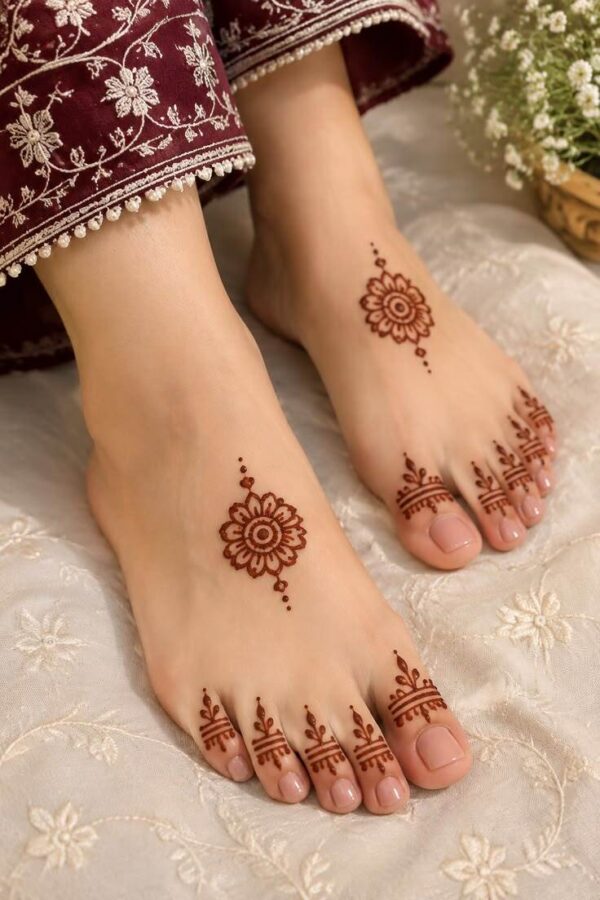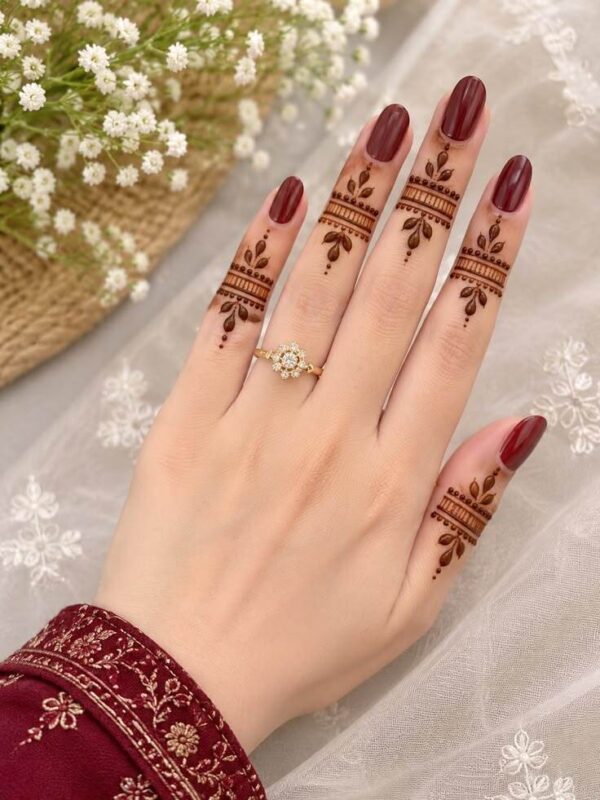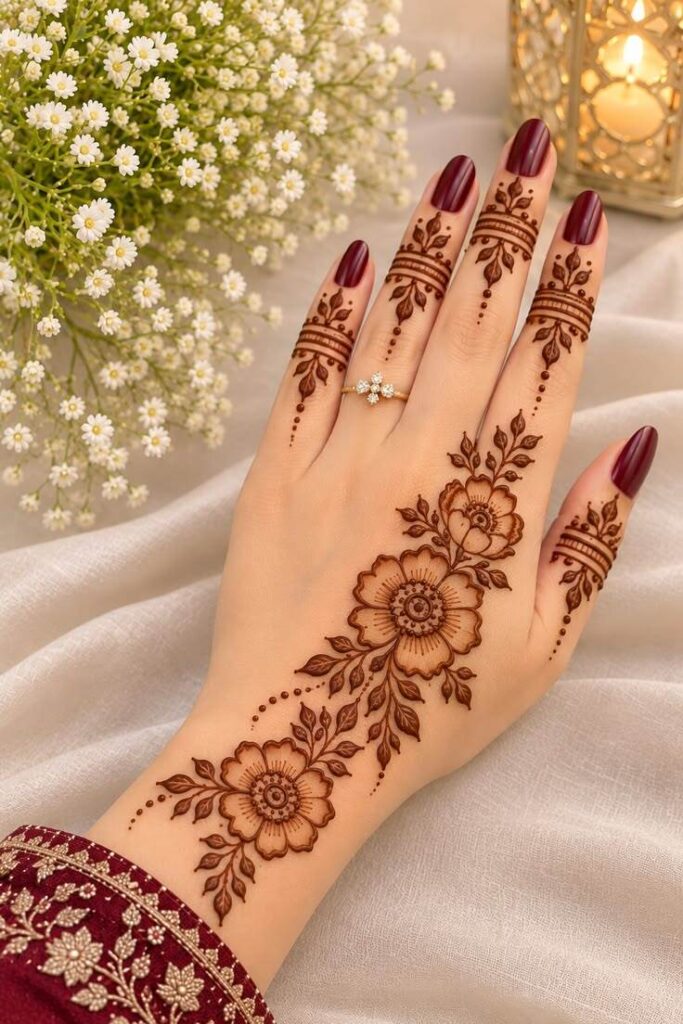
The best mehndi designs this season mix a few bold motifs with plenty of open skin: floral vines, a statement mandala on the back of the hand, and full bridal coverage for the big day. This guide collects our top picks from the StyleSafi mehndi board and explains which style suits which function.
Quick answer: For most people the best mehndi design is a floral vine or a single mandala — quick to apply, easy to read in photos and good for any function. Brides usually choose full-hand bridal mehndi; for Eid or a dholki, a simple back-hand design is enough.
What are the top mehndi designs right now?
Five styles come up again and again in searches and on our board:
Read next: Simple Mehndi Designs: Easy Ideas for Hands, Kids and Beginners
- Floral mehndi — roses, leaves and vines; the safest choice for any age.
- Unique, modern designs — geometric lines, negative space and jewellery-style patterns.
- Latest minimal designs — a small motif on one finger or the wrist.
- Bridal mehndi — full hands and arms, often with the couple’s initials hidden inside.
- Back-hand mehndi — the part everyone sees in photos, so it gets the boldest motif.
How do you pick the right mehndi design for your function?
Start with the occasion and the time you have. A bride’s mehndi can take four to six hours; a guest at a mehndi night usually has twenty minutes in the queue.
| Occasion | Good style | Time it takes |
|---|---|---|
| Mehndi night (guest) | Back-hand vine or mandala | 15–30 min |
| Eid, chand raat | Simple floral or Arabic-style trail | 10–30 min |
| Dholki / mayun | Finger and wrist motifs | 10–20 min |
| Bride (barat) | Full bridal, front and back, to the elbow | 4–6 hours |
| Office or college | Minimal finger design | 5–10 min |
Times are typical for an experienced artist and vary with detail.
Which mehndi designs are trending in 2026?
Lighter, airier work is in: designs that leave more skin showing between motifs, fine lines instead of heavy shading, and one centrepiece per hand. Peacocks, lotuses and roses remain the favourite motifs, and many brides now add a small portrait panel or the date of the wedding.
What makes bridal mehndi different?
Bridal mehndi covers more skin, uses denser filling and usually runs above the wrist. It is applied a day or two before the barat so the colour peaks on the wedding day. See our full guide to bridal mehndi designs for front and back hand ideas.
How do you get a dark mehndi colour?
- Leave the paste on for 6–8 hours, or overnight for bridal mehndi.
- Dab a little lemon juice and sugar mix on the dry paste so it stays on longer.
- Scrape it off with a blunt knife or your nails — don’t wash it off.
- Keep the design away from water for the next 12 hours.
- The colour keeps darkening for 24–48 hours, so judge it the next day, not right after removing the paste.
Use natural henna only. “Black henna” often contains PPD, a hair-dye chemical that can cause burns and lasting skin reactions. Natural henna stains orange first and turns reddish-brown; if a cone promises a jet-black stain in minutes, skip it. Do a small patch test a day before if you have sensitive skin.
More mehndi ideas by style
FAQs
Which mehndi design is best for beginners?
A floral vine from the wrist to one finger, or a single round mandala on the back of the hand. Both need only dots, petals and lines.
Which mehndi design is best for a bride?
Full-hand bridal mehndi on the front and back, reaching the elbow, with one centrepiece per palm. Apply it one to two days before the barat.
How long should mehndi stay on?
At least 6–8 hours for a good stain. Brides often keep it on overnight.
Why is my mehndi colour light?
The paste was removed too early, the skin was washed soon after, or the henna was old. The colour also keeps darkening for up to two days.
Is black mehndi safe?
No. “Black henna” often contains PPD, which can burn the skin. Use natural henna, which stains reddish-brown.